
Dental practices miss an estimated 25–35% of inbound calls, and a large share of those are prospective patients who simply call the next office. At a common new-patient value of $300–$1,000+, a single-doctor practice can lose anywhere from several thousand to over $50,000 a year to unanswered calls — a figure you can calculate exactly from five numbers.
By Viktoria Mols, CMO · Updated August 18, 2026 · 6 min read
Marketing spends thousands to make the phone ring. Then the phone rings — during lunch, after 5 p.m., while the front desk is checking a patient out — and no one answers. The caller doesn't leave a voicemail; industry data consistently shows most callers who reach voicemail hang up and call a competitor instead. The lost revenue never shows up in a report, because a call that never converted leaves no trace. That's what makes it dangerous: it's a large, recurring leak that's invisible on the P&L.
You can estimate your own missed-call cost with a simple formula:
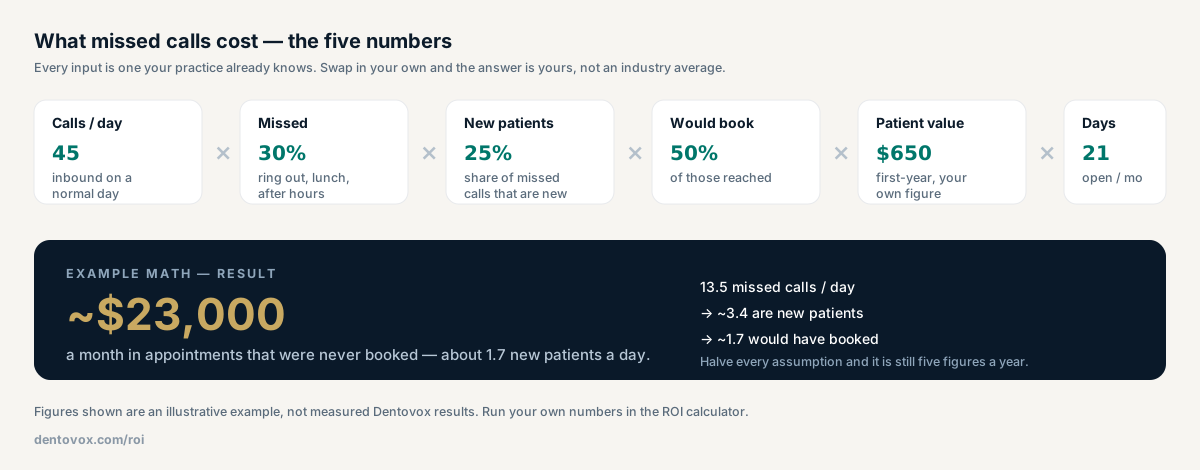
Monthly lost revenue = Calls/day × Missed-call rate × New-patient share × Booking rate × New-patient value × Working days
Here's what each input means and a conservative default:
| Input | What it is | Example |
|---|---|---|
| Calls/day | Inbound calls on a normal day | 45 |
| Missed-call rate | Share that go unanswered | 30% |
| New-patient share | Missed calls that are prospective patients | ~25% |
| Booking rate | Reached new callers who would book | ~50% |
| New-patient value | First-year value of a new patient | $650 |
| Working days | Days open per month | 21 |
Worked example: 45 × 30% = 13.5 missed calls/day. About 25% are new patients ≈ 3.4/day. Half would book ≈ 1.7 new patients/day. At $650 each that's ~$1,100/day, or roughly $23,000 a month in bookings that never happened. Even halving every assumption leaves a five-figure annual leak. Run your own numbers in the ROI calculator →
Missed calls aren't spread evenly. They cluster where staff can't pick up:
Voicemail doesn't fix it — callers won't use it. Hiring a second receptionist helps the daytime peak but not nights, weekends, or lunch, and it's expensive. The durable fix is to make sure every call is answered, every hour. That's the entire premise of an AI dental receptionist: it picks up on the first ring 24/7 in English and Spanish, answers routine questions, and books the appointment straight into Dentrix, Open Dental, or Eaglesoft before the caller can hang up — so the marketing you already paid for actually converts.
And the calls you missed last year? Those lapsed patients can be won back systematically with patient reactivation — a separate leak worth its own calculation.
Industry estimates commonly put unanswered inbound calls at 25–35% of total call volume, rising sharply after hours, during lunch, and at busy front-desk moments. Every missed call from a prospective patient is a booking that may go to a competitor.
Multiply daily call volume × missed-call rate × new-patient share × booking rate × average new-patient value × working days. A practice with 45 calls/day, a 30% miss rate, and $650 new-patient value can leave five figures per month unbooked.
Industry estimates for first-year new-patient value typically range from about $300 to over $1,000, depending on services, insurance mix, and treatment acceptance. Use your own figure for an accurate estimate.
Figures above are industry estimates for illustration, not Dentovox's measured results. Use your practice's real numbers in the ROI calculator.
Create an account free — no card — build your receptionist, and hear it handle a call on the spot. Your own number activates when you start a plan.