
Reactivation works when you stop blasting the whole inactive list. Segment by why each patient stopped — overdue hygiene, unscheduled treatment, cancelled and never rebooked, insurance change — then run a three-to-four touch sequence of SMS plus a voice follow-up over two to three weeks, offering two specific times in every message.
By Viktoria Mols, CMO · Updated September 15, 2026 · 8 min read
A lapsed patient is a person who already chose you once. They know the address, they've met the hygienist, their chart is in the system, and their insurance is probably already on file. Compare that to a cold new patient, who has to find you, trust you, and get past the first-visit friction — at whatever your practice pays per new-patient acquisition.
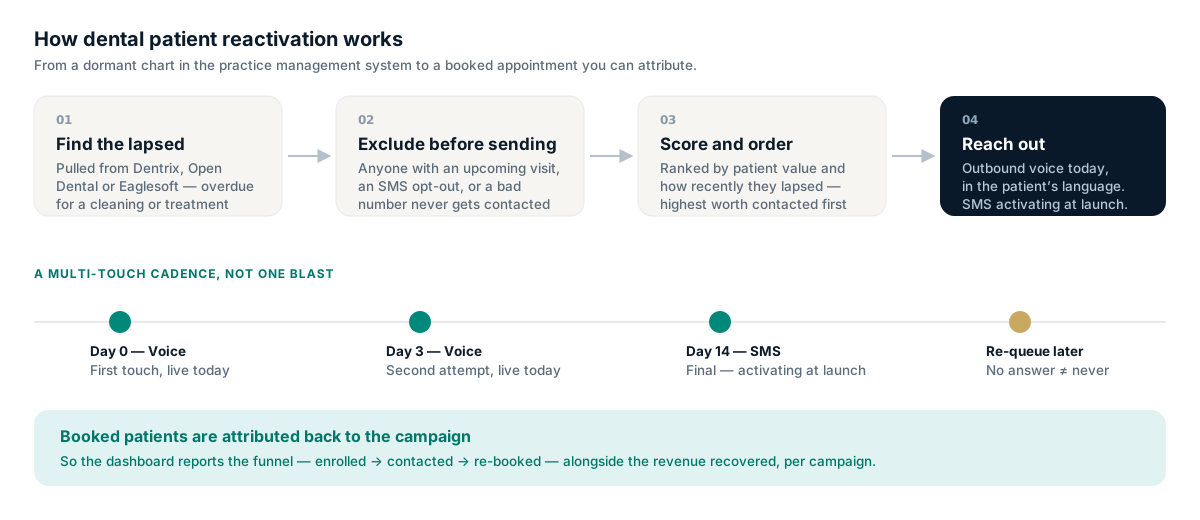
Most practices are sitting on hundreds or thousands of these records and have never worked them systematically, because working them means someone picking up the phone for hours a week and that someone is already answering the front desk. So the list ages quietly. That's the leak this playbook closes. (The other leak, the calls coming in today that nobody answers, is covered in how much missed calls cost a dental practice.)
This guide is about how to run the process. If you'd rather see the tool that runs it for you, that's Dentovox reactivation.
The common threshold is 18 months since the last completed visit — a patient on a six-month recall who's missed two cycles. But 18 months is a reporting definition, not an operational one. By then the patient may have found another office.
In practice, work the list in bands:
| Time since last visit | What's going on | How to approach |
|---|---|---|
| 7–9 months | Slipped past recall, no decision made | Simple overdue-hygiene nudge, two times offered |
| 10–17 months | Drifting; still remembers the office | Highest-value window — full SMS + voice sequence |
| 18–35 months | Formally lapsed; may have gone elsewhere | Warmer re-introduction, lead with convenience |
| 36+ months | Cold; contact details often stale | Low-effort single touch, clean the list as you go |
If you're starting from zero, run the 10–17 month band first. It's the shortest path to a filled chair.
Time is only half the picture. The other half — the half that decides what you actually say — is why they stopped. Four segments cover most lists:
Before sending anything, remove: patients marked deceased, patients who asked not to be contacted, existing STOP opt-outs, anyone with an active future appointment, and anyone in an open collections or dispute situation. Skipping this step is how reactivation campaigns generate complaints instead of bookings.
Four rules carry most of the result:
Skeletons you can adapt (keep your practice's own voice, and include your opt-out language):
Send the message in the patient's language. A Spanish-speaking patient who gets an English-only text mostly doesn't reply, and that's read as "not interested" when it was a language problem — see Spanish-speaking dental patients.
Three to four touches over two to three weeks, then stop. The goal is to catch the patient at a moment when booking is easy, not to wear them down.
| Day | Channel | Purpose |
|---|---|---|
| 1 | SMS | Specific reason + two times |
| 3–4 | Voice call | Reach non-readers; answer cost/insurance questions |
| 8 | SMS | Different two times — the first pair may simply not have fit |
| 14 | SMS | Short close-out: "still happy to hold a spot" |
| After | — | Requeue for a later cycle; don't keep pushing |
Timing matters as much as count. Weekday late morning and early evening tend to work; keep to permitted local hours and stay off Sunday mornings and holidays. Any patient who replies drops out of the sequence immediately — nothing damages trust faster than a scheduled message arriving after the patient already booked.
Reactivation outreach touches contact-consent rules including the TCPA, and the specifics depend on how you collected consent, what you're sending, and where your patients live. Consult your counsel before launching. Practical baseline: honor STOP immediately and permanently, respect quiet hours in the patient's local time zone, keep consent records, keep messages tied to the care relationship, and identify your practice in every message. Dentovox messaging handles STOP opt-out and quiet-hour windows in both English and Spanish; the policy decisions stay yours.
Track four numbers per campaign, per segment:
Report by segment. Overdue hygiene will look best on volume; unscheduled treatment will look best on dollars. Averaging them together hides both. Example math for scale, using your own inputs: 800 inactive patients, a third in the 10–17 month band, and a per-visit production figure from your own reports — run it before you build the campaign so you know what "working" would look like. The ROI calculator is a starting point.
Also watch the leading indicator nobody tracks: opt-out rate. A rising STOP rate means the list is being over-messaged or the segmentation is wrong.
The honest problem with everything above is labor. A four-touch sequence across a few hundred patients is dozens of hours of texting and dialing that your front desk does not have — which is why most practices run reactivation once, get a decent result, and never repeat it.
That's the gap Dentovox's patient reactivation software fills: it calls the lapsed patients on your uploaded list in English or Spanish (automatic selection from the PMS is built, not yet switched on) (SMS touches switch on after US carrier registration), books straight into Dentrix, Open Dental, or Eaglesoft — while the AI receptionist keeps answering the inbound calls the campaign generates. Pricing is flat per location; see pricing.
Most practices treat a patient as lapsed at 18 months since the last completed visit, because a patient on a six-month recall has already missed two cycles. Practical reactivation work usually starts earlier, at around 9 to 12 months, when the patient still remembers the office and the relationship is easy to restart.
Split by why they stopped, not just how long ago. The main segments are overdue hygiene, unscheduled treatment the dentist already diagnosed, patients who cancelled or no-showed and never rebooked, and patients whose insurance or life circumstances changed. Each needs a different message, and mixing them into one blast is the most common reason reactivation campaigns underperform.
Start with SMS and follow with a call. Text is low friction, easy to reply to, and works for patients who will not answer an unknown number. A voice follow-up a few days later reaches patients who never read the text and lets you handle questions about cost, insurance, or a treatment plan that a text cannot resolve.
Name the practice, name the specific reason for reaching out, offer two concrete appointment times, and make replying trivial. Avoid guilt, avoid vague check-ins, and avoid discounting hygiene by default. Include your opt-out language. Specific beats clever: a patient who reads the exact reason for the call responds far more often than one who reads a general reminder.
Three to four touches over two to three weeks, then stop and requeue the patient for a later cycle. A typical cadence is a text on day one, a voice attempt on day three or four, a second text with different appointment times on day eight, and a final short message around day fourteen. Continuing past that annoys patients and lowers your list quality.
Rules around consent, quiet hours, opt-out handling, and message content are specific to your situation, so consult your counsel before you launch. As a baseline, honor STOP requests immediately, do not send outside permitted local hours, keep records of consent, and keep messages tied to the care relationship rather than unrelated promotion.
Thresholds and cadences above reflect common industry practice†, and example math is illustrative — use your practice's own figures in the ROI calculator. This is not legal or clinical advice; consult your counsel on TCPA and consent.
† Industry estimates, not Dentovox's measured results.
What a platform can automate here today, workflow by workflow, is on the AI receptionist + patient recovery page.
Create an account free — no card — build your receptionist, and hear it handle a call on the spot. Your own number activates when you start a plan.