
Train a new dental receptionist in four stages over 30 days: watch and learn in week one, do the work with someone beside them in week two, own the daily routine in week three, and work independently with a review in week four. Prepare scripts and accounts before day one, hold a 15-minute check-in every day, and sign off each skill only when you have seen it done.
By Viktoria Mols, CMO · Published October 30, 2026 · 13 min read
It's Monday, 7:45. Your new receptionist arrives early, nervous, with a notebook. By 8:10 both lines are ringing, a patient is at the counter asking about her bill, and the person who was supposed to train her is in the back helping a hygienist. By lunch she has been handed the phone "just to answer it," has put two callers on hold she couldn't help, and has learned mostly that the job is chaos.
That first week decides a lot. New front-desk hires who are thrown onto the phones on day one tend to learn workarounds instead of the right way, and those habits are hard to undo later. A plan doesn't take more of anyone's time than chaos does — it just spends the time in a better order. This is that order, for a practice training one new person at a time.
Most of what makes the first week calm is done the week before. The new hire should arrive to find:
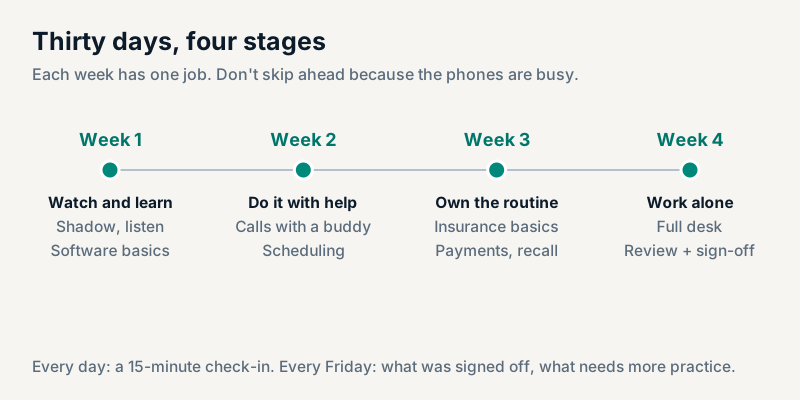
This week the new hire answers no calls alone. That feels slow; it is the fastest way to a receptionist who doesn't need re-training in a month.
| Day | Focus | By the end of the day |
|---|---|---|
| Monday | The practice: people, rooms, schedule, a tour. HIPAA basics and the emergency rule. | Can say who works which days and what to do with an emergency call. |
| Tuesday | Shadow the desk. Listen to calls on a second headset, if your system allows. | Has heard twenty calls and written down the five most common questions. |
| Wednesday | The practice software: finding patients, reading the schedule, appointment types. | Can find any patient and read tomorrow's schedule without help. |
| Thursday | Answering and transferring with the trainer listening. Greeting, hold, transfer. | Has answered and routed calls with the trainer beside them. |
| Friday | Review. Role-play the five most common calls. | Week-one skills signed off, or noted for next week. |
Two things to teach on the first day rather than the fifth: what HIPAA allows on the phone (it's more than most new hires fear — see HIPAA on the phone), and the emergency rule. Everything else can be learned by doing; those two can't be learned by mistake.
Now the new hire answers calls and books appointments — with a buddy close enough to step in. The trainer's job changes from showing to watching.
Expect mistakes this week and treat them as material for the daily check-in, not as failures. A new receptionist who is afraid of getting it wrong learns to put people on hold instead.
| Time | What the new hire does | Trainer |
|---|---|---|
| 7:45–8:00 | Switches phones from after-hours routing, checks voicemail, reads today's schedule. | Watches; asks one question about the schedule. |
| 8:00–10:00 | Checks patients in; answers line 1. | Takes line 2 and the overflow. |
| 10:00–11:30 | Confirmations for tomorrow, by phone. | Nearby; listens to the first three calls. |
| 11:30–12:00 | Returns messages left during the morning. | Reviews the messages after. |
| 1:00–4:00 | Front desk with both lines; books and moves routine visits. | Steps in only when asked or when a caller waits. |
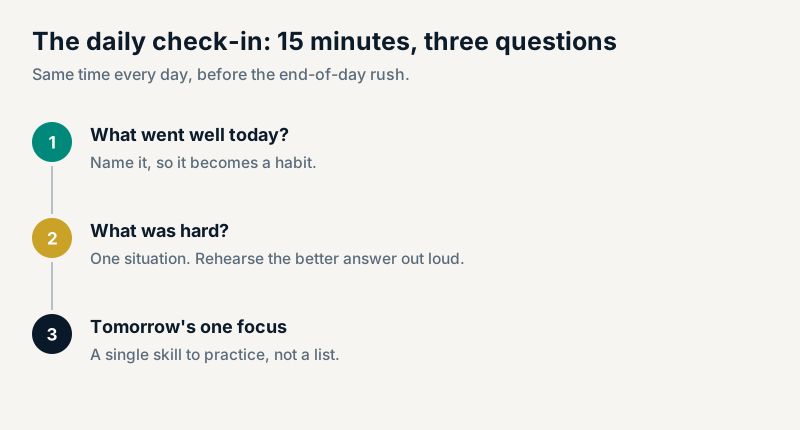
| 4:00–4:15 | Daily check-in. | Three questions, one focus for tomorrow. |
The new hire runs the normal day with the trainer nearby rather than beside them. This week adds the parts of the job that involve money and judgment.
The new hire runs the desk for full days, with the trainer reachable but not present. Plan at least one day when the trainer is genuinely busy elsewhere — it's the only honest test. Add the situations that only come with confidence:
On the last Friday, sit down with the sign-off list below. Anything not yet signed off becomes the plan for the next two weeks, not a mark against the new hire.
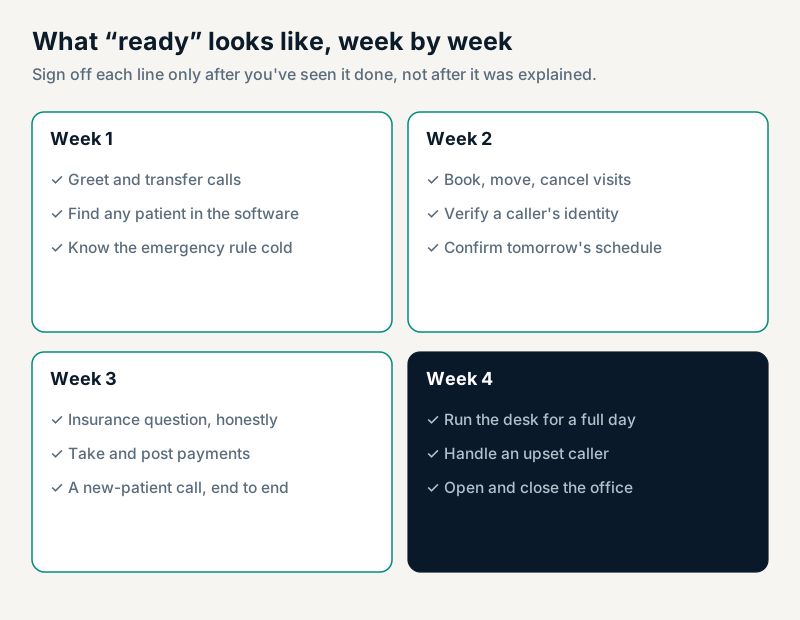
Sign each line only after you have watched it done correctly, ideally more than once.
Most practices hire because someone left, which means training starts exactly when the desk is busiest. Three things protect the plan:
Say the answers out loud in week one, before anyone has to ask:
By the end of the month, three things should be true: the new hire books new-patient calls without help, the trainer's day has gone back to normal, and the missed-call log hasn't got worse while someone was learning. If the last one isn't true, the problem is usually coverage, not the trainee — the training period is exactly when one person is doing two jobs. One way to protect the training month is to cover the overflow: Dentovox answers the calls nobody at the desk can take, in English or Spanish, and books appointments. Hear it on the demo line at (201) 690-2609.
About 30 days to work the desk independently for routine days, if training is planned: a week of watching and learning, a week of doing the work with help, a week owning the routine, and a week working alone with a review. Complex billing and insurance work often takes longer.
The emergency rule — which calls go to the dentist, which get a same-day slot, and when to tell a caller to dial 911 — and what HIPAA allows on the phone. Then the practice software and the most common calls, before answering phones alone.
Not alone. In the first week they should listen to calls, learn the software and answer with a trainer beside them. Putting a new hire on the phones on day one tends to build workarounds that are hard to undo.
Clear phone manner, scheduling in the practice software, verifying callers, explaining insurance and payments without over-promising, working confirmation and recall lists, handling upset callers, and knowing when to escalate. Spanish is a strong advantage in many areas.
Create an account free — no card — build your receptionist, and hear it handle a call on the spot. Your own number activates when you start a plan.